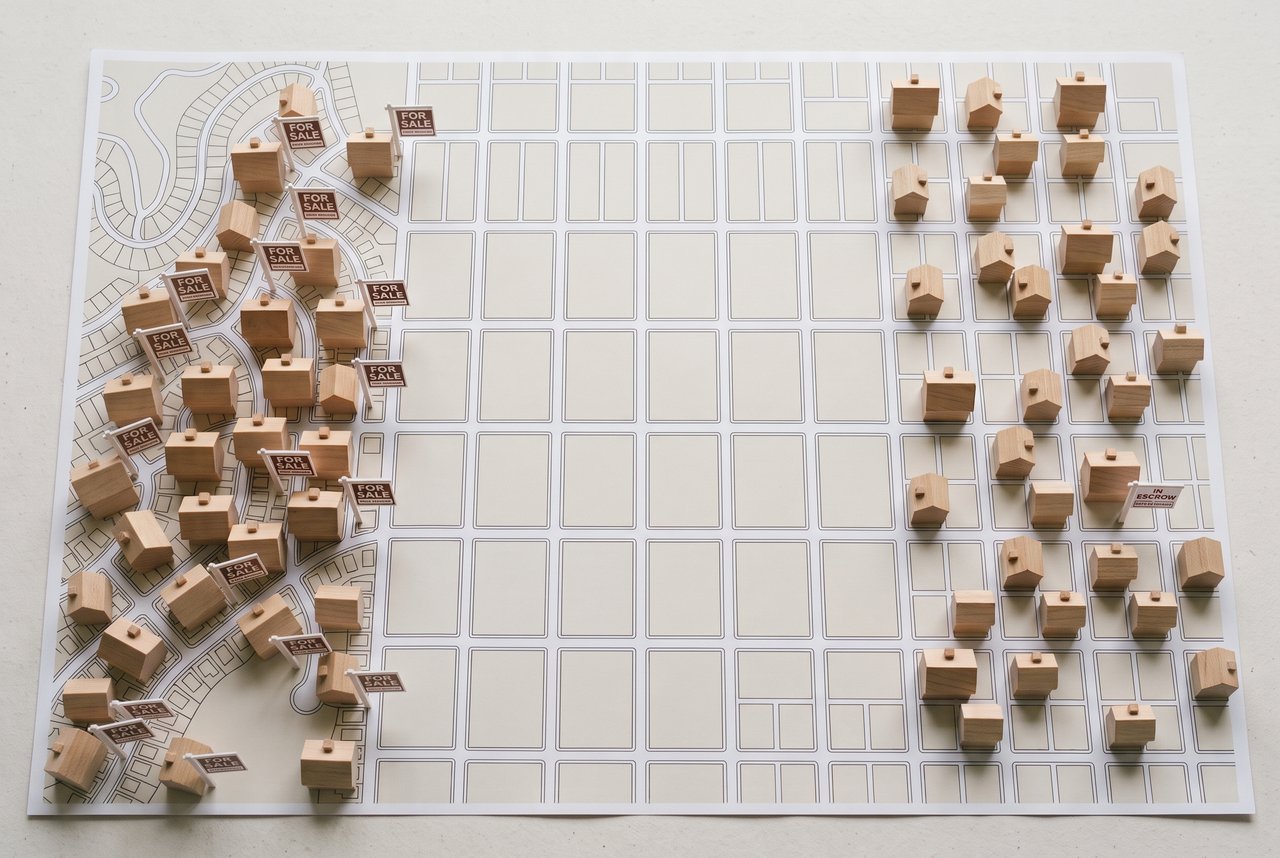
If you’ve followed housing news this fall, you’ve seen reports of slowing sales and rising inventory. Yet in some Los Angeles area neighborhoods, prices have held steady or continued to rise, and some homes are still drawing multiple offers. Part of the reason lies with the homeowners who are choosing not to sell.
The Cost of Moving
For homeowners who bought or refinanced when mortgage rates were near 3%, the cost of moving can be difficult to justify. In early October, Freddie Mac’s average 30-year fixed rate reached 7.4%, its highest level in nearly three years. On a $2 million mortgage, the difference between 3% and 7.4% is roughly $5,400 a month in principal and interest. For many owners who would otherwise like to move, staying put makes financial sense. This is known as the 'Mortgage Lock-In Effect'.
The Added Cost of Trading Up
The numbers become even more daunting for homeowners looking to move into a more expensive property. Consider someone who owns a $3 million home with a $2 million mortgage at 3%. If they sell and apply their $1 million in equity toward a $5 million home, they would need a new $4 million mortgage, before transaction costs. At 7.4%, their monthly principal and interest payment would jump from roughly $8,400 to $27,700, an increase of approximately $231,000 per year.
And then there are property taxes. In California, a new purchase is generally reassessed at the purchase price, which can mean a substantial increase over a homeowner’s existing tax assessment. Between the higher purchase price, higher mortgage rate, and potentially higher property taxes, it’s understandable why many homeowners are choosing to stay.
Not All Inventory Is Created Equal
An increase in the national number of homes for sale doesn’t necessarily mean more homeowners are choosing to list. Inventory can rise because sales have slowed, even as fewer new listings come on the market. And those unsold homes aren’t evenly distributed across neighborhoods or property types. What’s available to a buyer looking for a single-family home in a desirable neighborhood can be very different from what national inventory figures suggest.
We’re seeing these differences across Los Angeles. In the condo market and in some higher fire-risk areas, buyer demand has weakened while inventory has increased, putting downward pressure on prices. Yet in desirable neighborhoods where demand for single-family homes remains strong, buyers still have relatively few choices. Every homeowner who decides not to list represents one fewer competing property for those who do. Many buyers looking in these neighborhoods also have significant cash available, making them less sensitive to higher mortgage rates.
A Recent Example in Santa Monica
Our recent sale of a single-family home in Sunset Park is one example. The property last sold in November 2024 for $2,875,000. We listed it in September 2026 for $2,998,000 and received multiple offers, all of them cash. It sold this week for $3,328,450, nearly 16% more than its previous sale price less than two years earlier, without significant improvements in between. Not every home is attracting this level of interest, but the sale illustrates how limited supply and strong buyer demand can continue to support prices, even in a slower market.
The Balance Between Supply and Demand
The 'Mortgage Lock-In Effect' isn’t new, and it won’t last forever. For now, it helps explain why a slowing housing market doesn’t necessarily mean falling prices. In neighborhoods where demand remains strong and available homes are limited, prices can remain firm or continue to appreciate. If you’d like to better understand how these trends are affecting your neighborhood, we’re always happy to share our take on the market.
Your Trusted Advisors,
Peter and Tregg
Copyright © 2026 Peter Maurice and Tregg Rustad. All rights reserved. Unauthorized use, reproduction, or distribution of this content is prohibited.